
SEC shifts to moderate regulation, CFO compliance burden may ease
The SEC chairmanship is about to change, with Paul Atkins expected to succeed Gary Gensler, bringing a more moderate approach to enforcement and rulemaking. Based on analyses from securities lawyers and former SEC officials, this article explores how CFO regulatory burdens may shift, including the shelving of climate disclosure rules, a pivot in cryptocurrency regulation, and prospects for PCAOB reform.
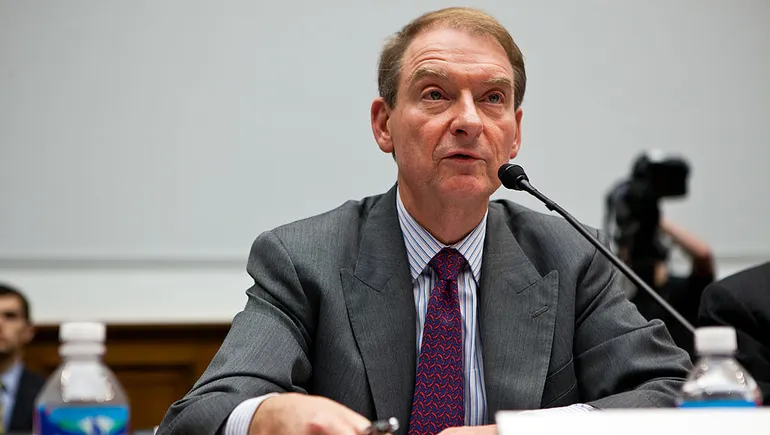
With a change in leadership at the U.S. Securities and Exchange Commission (SEC) on the horizon, chief financial officers (CFOs) may need to prepare for a sharp shift in the regulatory winds.
This month, SEC Chair Gary Gensler is departing, and his likely successor, Paul Atkins, will take office. According to securities lawyers and former SEC staff, this could bring more targeted enforcement and softer, more collaborative rulemaking.
"They are at completely opposite ends of the spectrum," said Amy Lynch, president of Frontline Compliance, in an interview. She noted that Gensler, like many Democratic SEC chairs, tends toward aggressive regulation.
Atkins is a Republican who, according to Lynch (a former SEC examiner and now founder of Frontline Compliance, an advisory firm for financial services companies), favored relatively light-touch rulemaking during his tenure as an SEC commissioner from 2002 to 2008. As SEC chair, he will answer to President Donald Trump, who won the November election and has promised to eliminate at least ten existing federal regulations for every new one added.
Lynch said that during his first term, Trump "tried to overturn the SEC, dismantle it like other federal agencies, and he will do it again."
By cutting the SEC's budget, staffing, and regulatory scope, Atkins would align with the government-wide cost-cutting and efficiency drive led by Tesla CEO Elon Musk.
"For CFOs, this should be a better environment to operate more freely."
—Dave Brown, partner at Alston & Bird
According to securities lawyers and former SEC staff, Atkins is likely to permanently shelve several of Gensler's rulemakings, including detailed climate risk disclosure requirements.
"We think their approach will be very different," said David Brown, a partner at Alston & Bird, referring to Atkins and Gensler. "For CFOs, this should be a better environment to operate more freely."
Brown said in an interview that on enforcement, Atkins may not impose the same volume of fines as his predecessor. Under Gensler, the SEC imposed a record $8.2 billion in penalties in fiscal year 2024.
Securities lawyers and former SEC staff said Atkins may focus more on protecting harmed investors rather than broad, proactive crackdowns on companies active in the securities markets. They noted that Gensler had launched broad offensives against financial institutions that failed to prevent employees' off-channel communications and executives who failed to timely file stock trading and holding reports.
Lynch said SEC investigators under Atkins may not emphasize aggressive enforcement "sweeps" targeting groups of companies, but would rely more on individual tips, complaints, and referrals from other agencies.
"Under Gensler, the pendulum swung too far in one direction," Brown said. Under Atkins, the SEC may take "a more rational, focused approach to enforcement."
A favorable rebound for crypto
The surge in Bitcoin's price on December 4 signaled investor expectations of SEC regulatory easing. That day, shortly after Trump announced his nomination of Atkins to lead the agency, Bitcoin broke above the $100,000 mark for the first time.
During his tenure, Gensler said digital assets are securities and sued multiple crypto developers for failing to register with the SEC and comply with standard investor protection rules.
Atkins has said that cryptocurrencies should not necessarily be treated as securities, especially tokens traded on peer-to-peer networks. He is the founder and CEO of Patomak Global Partners, a firm that advises public companies and digital asset firms. Since 2017, he has been co-chair of the Token Alliance, a cryptocurrency industry lobbying group.
To signal a new crypto regulatory approach, acting SEC Chair Mark Uyeda announced on January 21 the creation of an agency task force to create a regulatory framework that "respects legal boundaries."
"To date, the SEC has primarily relied on enforcement actions to regulate crypto retroactively and reactively, often adopting novel and untested legal interpretations along the way," the agency said in a press release. "Clarity on who must register, and practical solutions for those seeking to register, have been elusive."
Securities lawyers and former SEC staff said an SEC under Atkins may not regulate most crypto assets as securities, but may treat them as commodities subject to lighter regulation.
Atkins may be "at least as aggressive as Chair Gensler in pursuing crypto fraudsters."
—Joshua Hess, partner at Bryan Cave Leighton Paisner
Meanwhile, Atkins may be "at least as aggressive as Chair Gensler in pursuing crypto fraudsters," Joshua Hess, a partner at Bryan Cave Leighton Paisner, said in an interview. In such enforcement, the SEC may argue that certain crypto asset transactions involve securities, he said.
ESG rules may be shelved
Along with withdrawing climate risk disclosure requirements, Atkins may terminate other rulemakings related to environmental, social, and governance (ESG) performance, including a proposal requiring companies to report on the demographics of their workforce and boards, securities lawyers and former SEC staff said.
"They will absolutely shelve these initiatives," Brown said, referring to such efforts.
Atkins has publicly condemned the push for ESG reporting.
"Mandating politicized corporate disclosures is inconsistent with the SEC's mission to protect investors and facilitate capital formation," he said in a 2018 Wall Street Journal op-ed. "Instead, it would divert resources from business operations and growth."
The outlook for the PCAOB
Securities lawyers and former SEC staff said Atkins may target the Public Company Accounting Oversight Board (PCAOB) as one of his most far-reaching changes, in both rulemaking and enforcement.
Gensler overhauled the PCAOB after becoming SEC chair in 2021, replacing its leadership and ordering stricter oversight of accounting firms that audit public companies.
Under its current chair, Erica Williams, the PCAOB cleared a backlog of inspection reports. In its review of 2023 audits, the PCAOB found that audit firms failed in 46% of engagements to obtain sufficient evidence to support their opinions on financial statements or internal controls over financial reporting.
Facing stricter scrutiny, large firms improved audit quality, Williams said in a December report to the SEC.
The PCAOB, created by Congress in 2002 after the Enron accounting scandal, has proposed or updated 20 audit standards under Williams, several of which had not been touched in two decades.
"More formal standard-setting and rulemaking actions occurred in 2024 than in any year since the PCAOB's inception," said Lara Long, a managing director at business consulting firm Riveron, in an email.
Some proposed rules have drawn pushback from the accounting industry.
For example, in 2023 the PCAOB proposed a standard requiring accounting firms to increase efforts to detect fraud. Firms would not only need to identify compliance laws and document potential deviations, but also create procedures to screen for noncompliance and actively evaluate potential violations.
That rule was recently shelved by the PCAOB, and Brown called it "unusually aggressive."
"Auditors are CPAs, not legal experts," PCAOB board member Christina Ho said in a statement when the rule was proposed. "The new requirements would significantly expand auditors' need for lawyers, legal experts, and other possible specialists, leading to substantial increases in audit fees," said Ho, one of two board members who dissented in the 3-2 vote on the proposal.
Brown said Atkins may refocus the PCAOB on core audit risks, roll back some rules, and "ensure that the risks we are truly trying to address are real."
Long said the Trump administration may review the PCAOB's effectiveness since its inception and could merge it into the SEC.
"The idea of merging the PCAOB or parts of it into the SEC is gaining renewed attention as policymakers aim to reduce duplication, lower costs, and refocus regulatory efforts," said Jennifer Wood, a partner at accounting and consulting firm Bonadio Group.
"Atkins has long advocated for reducing regulatory overreach and reassessing the board's independence and budget," she said in an email. "This could mean fewer enforcement actions, a more restrained rulemaking agenda, and possibly narrowing the PCAOB's scope of responsibilities."
'Difficult to reform'
For years, the PCAOB has been in the crosshairs of conservative think tanks and Republican lawmakers.
The board "has proven to be inefficient, costly, opaque, and largely difficult to reform," according to "Mandate for Leadership," a key document written by the Heritage Foundation's "Project 2025" organization aimed at influencing the Trump administration.
"To reduce costs, increase transparency, strengthen due process, congressional oversight, and responsiveness," the PCAOB should be abolished and its regulatory functions merged into the SEC, Project 2025 said.
Although Atkins may bring more moderate regulation, securities lawyers and former SEC staff said CFOs should think twice before cutting compliance budgets.
They said on key challenges such as cyber risk, Atkins may not deviate far from Gensler's policy approach.
"The Trump campaign was hacked at least once," Lynch said. "The administration understands cybersecurity risks."
Additionally, if Atkins eases regulation, shareholders may intensify scrutiny of companies, former SEC staff and securities lawyers said.
"Investors will want to ensure these companies are held accountable," Lynch said, noting that "investor litigation can be more damaging than regulatory litigation."
