
Six Key Takeaways from the Senate Hearing on Cryptocurrency Market Structure
The U.S. Senate Banking Committee recently held a hearing to discuss how to build a regulatory framework for the market structure of crypto assets. Blockchain Association CEO Summer Mersinger, former CFTC Chairman Timothy Massad, and others testified, engaging in debates over regulatory lag, asset classification, illegal activities, and conflicts of interest between politics and business. This article distills six key points.
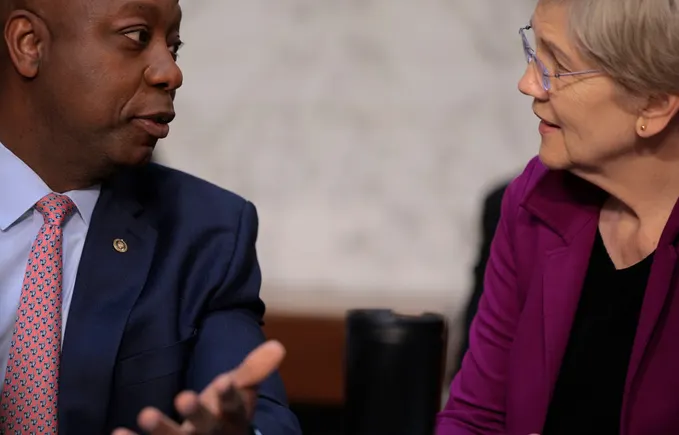
After the House released the CLARITY Act in May—a market structure bill aimed at establishing a regulatory framework for cryptocurrency—the Senate Banking Committee met with industry leaders last week to discuss how the Senate can develop its own framework. Here are the six key takeaways from this hearing.
1. The U.S. has fallen behind in establishing a crypto regulatory framework
Summer Mersinger, CEO of the Blockchain Association, said that countries such as the UK, Japan, and Singapore are implementing tailored digital asset frameworks, while the U.S. has fallen behind. She said, "We must treat establishing a federal regulatory framework as a national priority. Digital assets and blockchain technology are revolutionizing financial services, supply chains, and digital identity. The country that leads on this policy will set global norms and unlock enormous economic and strategic benefits. The U.S. should be the leader, and now is the time for us to lead."
2. Existing laws designed for traditional finance do not fully apply to the crypto space
Mersinger noted that regulating the industry with existing laws "creates ambiguity," which limits innovation and pushes change-makers toward jurisdictions with clearer crypto rules. She also stated that traditional banking regulation is not suitable for digital assets or blockchain because they are designed for centralized intermediaries—"and that's not what we're dealing with here." She said, "Without thoughtful rules, we risk stifling innovation, leaving U.S. consumers without proper safeguards and protections, and ceding leadership in a field that will define the future of global finance and technology."
3. Security or commodity? The debate continues
Committee Chairman, South Carolina Republican Senator Tim Scott, said in his opening remarks that Senate Republicans recognize the "need for clarity and clear definitions of what is a commodity, what is a security, and how digital assets can be traded and custodied in a way that promotes innovation while protecting investors." Mersinger asserted that regulators must recognize that digital assets are not securities. "Code is not a security," she said.
Timothy Massad, former Chairman of the Commodity Futures Trading Commission (CFTC) and former Assistant Secretary of the Treasury, suggested that the discussion is broader than this. "This is a technology, not an asset class. It will be used in many ways, including tokenized securities," Massad said. "Whether something in digital form is a security, a commodity, or neither is difficult to define in a paragraph or two in legislation. It depends on what the token represents, whether there is an issuer, whether the transaction involves capital raising, and so on." Furthermore, the technology and its use cases are evolving rapidly, "so we should not lock in definitions that will soon become outdated," he said.
4. Illicit activity and fraud are concerns, but the extent varies by source
According to FBI statistics, Americans lost more than $9 billion to crypto scams last year, a 66% increase from the previous year. Senator Elizabeth Warren, the committee's senior member, cited these figures. Additionally, "terrorist organizations have shown greater sophistication in using cryptocurrency, shifting to non-custodial wallets, mixers, and privacy coins like Monero," according to a TRM Labs report cited by Warren.
But Scott said, "Data shows that illicit activity using cash still exceeds that using cryptocurrency," likely referring to 2024 Treasury data, which found that "the scale of virtual assets used for money laundering remains far below that of fiat currency." The Treasury reported: "Criminals heavily use cash-based money laundering strategies, mainly because cash provides anonymity. They typically use the U.S. dollar because it is widely accepted and stable."
Jonathan Levin, co-founder and CEO of Chainalysis, said that blockchain enhances the ability to quickly combat illicit activity. "Tracing funds on the blockchain is actually easier than in traditional finance." He added: "Issuers of tokenized assets can actually take action to easily freeze and seize assets. In a recent pig-butchering case, cryptocurrency exchange OKX and stablecoin issuer Tether cooperated with the U.S. Secret Service to freeze and seize $225 million in criminal proceeds. The traceability and programmability of these assets are key advantages in addressing illicit activity." Levin said that Chainalysis works with banks, fintech companies, and public institutions to mitigate fraud, finding that less than 1% of crypto transactions are linked to illicit activity, which is comparable to traditional finance.
5. Elected officials have close ties to the crypto industry: questioned by some, but not illegal
Warren called out President Donald Trump's numerous personal dealings in the crypto industry, including issuing his own memecoin, holding a crypto portfolio, and (his sons) owning a Bitcoin mining company. Citing Chainalysis data, Warren said that Trump and his partners earned more than $320 million from fees on the $TRUMP memecoin.
"If Congress passes a bill establishing a new federal regulatory framework for the crypto market, what would happen to the crypto market? Could it grow?" Warren asked Richard Painter, former chief White House ethics lawyer. "It would grow substantially," he said. "What impact would that have on President Trump's memecoin value?" Warren asked. "It would make him very wealthy, even wealthier than he is now," Painter said.
Painter also criticized lawmakers who consider crypto legislation after receiving large campaign donations from crypto companies. He recently tweeted that Senator Kirsten Gillibrand (D-NY)—who co-sponsored stablecoin legislation that preceded the GENIUS Act—has received $217,000 in campaign donations from crypto companies. Painter said that the President playing an outsized role in digital assets, and members of Congress accepting campaign donations from the crypto industry and voting on legislation, would lead to "a lack of confidence in our regulatory system."
6. What if lawmakers fail to properly structure the market framework?
Delaware Democratic Senator Lisa Blunt Rochester asked Painter what the risks would be if Congress moved too quickly on crypto legislation without a clear understanding of market consequences. "The risk is that we repeat the mistakes of the 1920s in regulating banks, and the Great Depression that followed—a decade-long depression," Painter said. "The risk is that we repeat 2008, when campaign donations flooded into Congress from the securities swap industry and other financial services sectors, and we experienced decades of deregulation, economic collapse, millions of American families losing their homes, and people losing their jobs." "We don't want another economic collapse caused by deregulating the financial services industry," he said.