
New credit loss accounting standard expected to impact retail credit card revenue
The new credit loss accounting standard (CECL) requires banks to estimate and reserve for losses based on the entire life cycle of loans, changing the previous practice of only addressing loans with identified issues, typically over a 12-month period. Morgan Stanley analysts believe this change will increase volatility in bank reserve provisions, raise costs for new loans, and particularly impact retailers that rely on in-store credit cards, such as Macy's, Kohl's, and Nordstrom. Large banks have implemented the standard since 2020, while community banks and credit unions have deferred it to 2023. Banking groups attempted to delay or modify the standard but only obtained a partial extension.
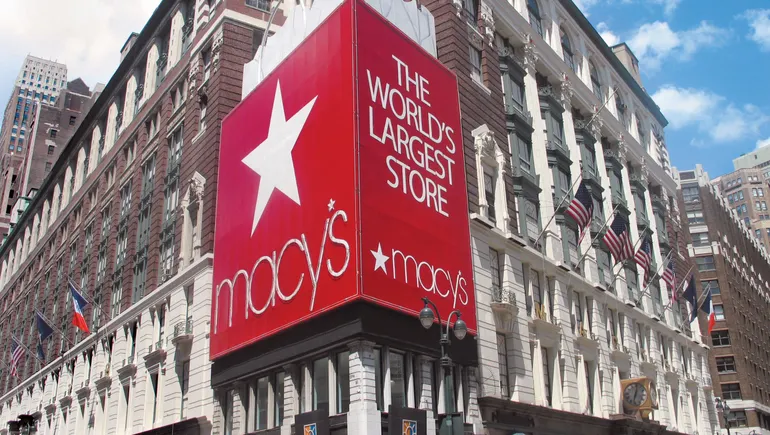
Retailers that rely on proprietary credit cards to drive sales could face an income shock this year due to a change in accounting standards applied by their bank partners.
Under the current expected credit loss (CECL) standard, effective for SEC filers for fiscal years beginning after December 15, 2019, banks must set aside reserves for their entire loan portfolios based on estimated losses over the full life of the loans.
Previously, banks set aside reserves using an incurred loss approach, only for loans that had gone bad, and typically covering only a 12-month horizon.
The change could have a disproportionate impact. How much banks set aside determines how much credit they provide and at what cost, which in turn greatly affects the credit-related income retail partners with in-store credit cards can expect.

The body that wrote the standard, the Financial Accounting Standards Board (FASB), has said the new standard is expected to affect the timing of how banks calculate losses, but should not affect the amount banks set aside.
However, Morgan Stanley analysts believe the impact could go far beyond that. Because the change increases the volatility of banks' reserve calculations, banks will ultimately reduce credit supply and raise credit costs.
"We expect increased volatility in loan loss reserve provisioning," the analysts said in a recent research report. "This will raise the cost of new loans, especially for borrowers with lower credit quality, to which many retail credit card portfolios are skewed."
Moreover, if the economy slips into a recession this year as some predict, banks will recognize loan loss reserves faster and in larger amounts, slowing credit supply.
"Credit card portfolio profits will decline faster, on top of consumers starting to pull back on spending," the Morgan Stanley analysts said.
The new standard took effect for large banks this year and will take effect for community banks and credit unions in 2023.
Macy's, Kohl's hit hardest
Retailers such as Macy's, Kohl's and Nordstrom, whose sales are disproportionately dependent on in-store credit card customers, will be most affected, analysts said.
Macy's is expected to bear the brunt, as up to 70% of its operating profit (EBIT) is expected to come from in-store credit card sales, a share that could rise to 85% in 2021.
For large retailers overall, credit card sales account for an average of 50% of operating profit, analysts estimate.
"Removing the credit growth engine from these stores could further drag on earnings per share and valuations," the analysts said.
Bank concerns
For years, banking industry trade groups have tried to get FASB to reconsider the CECL change, but have achieved little beyond delaying the effective date for community banks and credit unions to 2023.
"Partial deferral without a requirement for study or reconsideration does not reduce the ongoing data, modeling and audit requirements... nor does it address the procyclicality it will exacerbate," American Bankers Association (ABA) President Rob Nichols said last year.
To help banks fight CECL, House Financial Services Committee senior member Rep. Blaine Luetkemeyer, R-Mo., introduced legislation last year that would require FASB to undergo the same regulatory approval process as federal agencies.
That process includes a review period during which Congress has the opportunity to weigh in before regulatory changes are finalized and take effect.
The legislation has not advanced, but it sends a signal to FASB—a private nonprofit organization—that lawmakers have it in their sights.
"The bill would not strip FASB of its independence, but it would force them to do the due diligence they have shown they are unwilling to do," Luetkemeyer said.
A FASB spokesperson said the organization and its parent, the Financial Accounting Foundation (FAF), are willing to work with interested parties to ease concerns.
"FAF and FASB are committed to continuing to meet with stakeholders on Capitol Hill and elsewhere to answer their questions, hear their concerns, and discuss the time-tested benefits of the integrity of the standard-setting process," the spokesperson said.