
Retail CFOs Brace for Consumer Spending Surge: Rising from the Pandemic Ruins
The pandemic pushed retailers to two extremes—grocery stores thrived while some malls struggled. Now, retail CFOs are betting on a high-spending wave from U.S. consumers in the second half of 2021. The economy grew at an annual rate of 6.4%, retail sales surged 37%, and households received three rounds of federal stimulus funds. CFOs are expanding inventory, increasing cash reserves, diversifying suppliers, and boosting e-commerce investments. Industry experts note that successful players focus on simplifying consumers' lives, but face challenges such as inflation, labor shortages, and trend uncertainty.
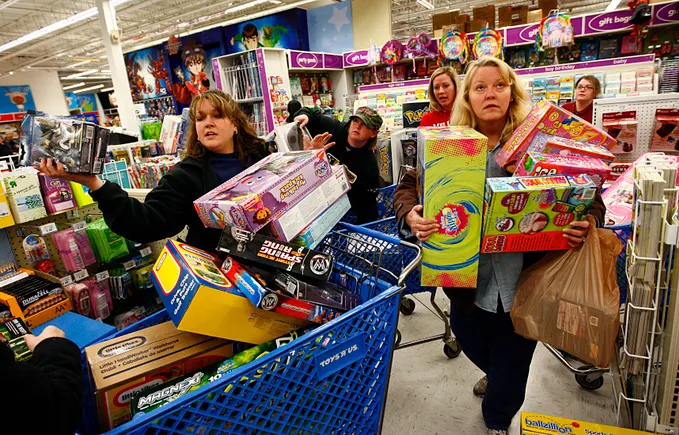
The COVID-19 pandemic pushed many retailers into one of two extremes: overdrive or a sudden halt—grocery stores thrived, while some shopping malls were locked and fell into depression. Now, retailers, whether thriving or struggling, have their chief financial officers (CFOs) betting on a wave of intense consumer spending in the second half of 2021.
According to the National Retail Federation (NRF), the economy grew at an annualized rate of 6.4% in the first quarter, with a projected growth of 6.6% for the full year. Last month, as vaccinations became widespread and businesses reopened,retail sales surged 37%。
Many households are flush with cash from three rounds of federal stimulus payments, including the $1,400 sent from Washington weeks ago. According to the NRF, consumers' wallets are "primed and ready" for heavy spending. The organization forecasts that retail sales in 2021 will jump by as much as 8.2% over last year.
"Our optimism is higher than it was at the beginning of the year," Walmart CEO Doug McMillon said in a statement today. The company reported a 6% increase in comparable sales for the quarter ending April 30. "We expect sustained pent-up demand throughout 2021."
Industry experts point out that as demand rises, retail CFOs are expanding inventories, maintaining high cash levels, and diversifying suppliers. They are also using near-real-time data to adjust staffing and inventory, and increasing investment in online platforms and other e-commerce assets.
Rodney Sides, vice chairman of Deloitte and leader of its U.S. retail and distribution practice, said the adaptability retail CFOs showed during the pandemic, and their preparation for the post-pandemic boom, offers lessons for CFOs in other industries facing surging demand with fewer challenges. "Many of the retail trends we saw before the pandemic didn't stop; they accelerated," he said, citing the explosive growth of online shopping. Successful retailers "focused on making consumers' lives easier."
Many retailers learned the immense value of e-commerce through the painful lesson of collapsing revenue. "It's a tale of two retailers," Sides said. Stores selling "non-essential" items like clothing, footwear, and furniture closed, while retailers of essentials like food, drugs, and hardware thrived.
"Companies in the essential categories shone," said Craig Rowley, senior client partner and retail expert at Korn Ferry. Grocery chains, he said, "are now wondering if they can sustain the 25% growth they saw last year." These chains built online stores and expanded delivery and curbside pickup services, boosting e-commerce sales from 5% of total sales to over 10%.

As many new digital shoppers cool to physical stores, the NRF says online sales for all types of retailers will grow 18% to 23% this year, after already jumping 21.9% in 2020.
On the brink of failure
When the pandemic hit, disrupting supply chains and every corner of operations, retail CFOs increased cash reserves by drawing on credit lines, Sides said. Last year, the number of retailer bankruptcies reacheda record 52. Rowley said the pace of bankruptcies may remain high in 2021, bringing the U.S.'s roughly 45 square feet of retail space per person closer to Europe's approximately 10 to 15 square feet. "Many retailers are on the edge," he said, noting that several private equity firms are reviewing distressed companies, attracted by the industry's high cash flow and turnaround potential.
Sides noted that inflation from overheated growth could eventually prompt the Federal Reserve to raise benchmark interest rates from historic lows, increasing borrowing costs for many of the most stressed retailers. "If interest rates rise, there will certainly be an impact," he said. There will inevitably be "some divergence" among retailers, with large chains winning on price and scale, while companies lacking product differentiation will struggle or fail.
Sides said that if recent decades are any guide, achieving a turnaround will be a formidable task. "In the past 20 years, I haven't seen a retail company emerge stronger after bankruptcy."
Online or offline?
Despite rapidly building consumer demand, the shape of the post-pandemic retail industry has yet to clearly emerge. "This is typically a highly trend-driven industry," Rowley said, "but there's no trend right now, which makes it difficult for CFOs to make decisions." Forecasting future store traffic is especially challenging and critical. If forecasts are off, CFOs may hire too many or too few employees, and order too little or too much inventory. The stakes are high. "If you buy too much, you have to discount, hurting profits; if you buy too little, you disappoint customers and lose sales," Rowley said.
Industry experts say CFOs need to estimate when and to what extent employees will return to offices near stores from working from home, and whether the sudden shift from in-store to online sales is growing or leveling off. Finding enough in-store staff can be difficult. In many areas, fear of COVID-19 is suppressing job seeking. The U.S. Centers for Disease Control and Prevention recently announced that vaccinated people don't need masks, but it hasn't eliminated safety concerns among retail and other frontline workers.
"The tide is rising and falling faster than we've ever seen," Sides said. CFOs' estimates of in-store and online sales will determine inventory levels and the balance of stock shipped to stores or kept in distribution centers. Still, most CFOs are "doubling down" when planning inventory because economic forecasts are fairly consistently positive, Sides said. To revive store traffic, CFOs need to convince shoppers that stores are risk-free. "Retailers need to better communicate their safety standards."
Companies that reassure customers earlier may gain market share. Even with explosive e-commerce growth, in-store transactions still account forabout 86% of total retail sales。
Defense and offense
Industry experts say retail CFOs are reducing the risk of another supply chain disruption by diversifying suppliers. Instead of focusing solely on lowest cost, they are building alternative supply sources in East Asia, Latin America, and other regions. Experts say they may hold ample cash while remaining vigilant about ongoing pandemic pressures and risks, such as outbreaks of COVID-19 variants.
CFOs are also investing in digital capabilities and relying more on e-commerce data and analytics. They've learned optimal inventory levels, customer demand and purchasing preferences, and how much stock to keep in stores versus distribution centers. These insights help lower operating costs. On the offensive side, CFOs are increasing revenue by selling advertising and showcasing other companies' products on online platforms, earning commissions of 5% to 15%, industry experts say.
Retailer advertising sales are "the 2021 version of private-label credit cards 15 years ago—when every retailer suddenly realized that by promoting their own card, they could gain margin points through the back door," Sides said. Some major challenges facing CFOs predate the pandemic. They still need to address declining margins and falling returns on assets. "Did consumers exclusively benefit from margin erosion, or did someone else take some of the profit to support their business model?" he said. "We haven't been able to figure that out yet."
The sharp drop in consumption during the pandemic, Darwinian pressures, and the rise of e-commerce have confirmed to CFOs that consumers are in charge. "As consumers, we are the power," Sides said. "We expect retailers to meet our needs at any point in time and deliver consistent execution online or in physical stores."
Waking from a nightmare
Hand & Stone Massage and Facial Spa suddenly lost all its customers in March 2020, as the COVID-19 pandemic hammered its revenue. "We woke up to find all 450 franchise locations ordered to close," said CFO Scott Brennan. Brennan assessed the company's capital structure and liquidity, and helped franchisees stay solvent by deferring fees for advertising, analytics, and point-of-sale systems. Hand & Stone also helped spas apply for government aid, including the Paycheck Protection Program. To prepare for reopening, the company assisted franchisees in gathering state and local health and safety regulations.
Since the pandemic began, Hand & Stone has opened 25 new spas, and membership has grown by about 2%, Brennan said. Since early 2021, most of its key performance indicators have seen double-digit growth. Even as the pandemic recedes in many areas, the spa company cannot let its guard down. Brennan said Hand & Stone has hired staff from competitors that closed during the pandemic, but still struggles to find qualified people. "It's always been a challenge, and now it's even more of one."
Like almost all CFOs, Brennan was caught off guard by the pandemic, and he is now more vigilant about risks and downside scenarios. "We're very cautious about new variants, about vaccine failure, about anything that could be thrown at us." Brennan is also more confident in the company's resilience. "Having gone through the pandemic, we'll come out stronger and better prepared," he said. "It's hard to imagine a risk worse than waking up one day to find business completely shut down."