
Female CFOs: Raise Your Hand and Move Forward Bravely
From Angela Pierce's solitary struggle in investment banking in the 1990s to today's record-high proportion of female CFOs, four female financial leaders—Angela Pierce, Kelly Steckelberg, Natalya Davick, and Mandy Fields—shared how they overcame self-doubt, broke down workplace barriers, and encouraged more women to boldly pursue senior positions.
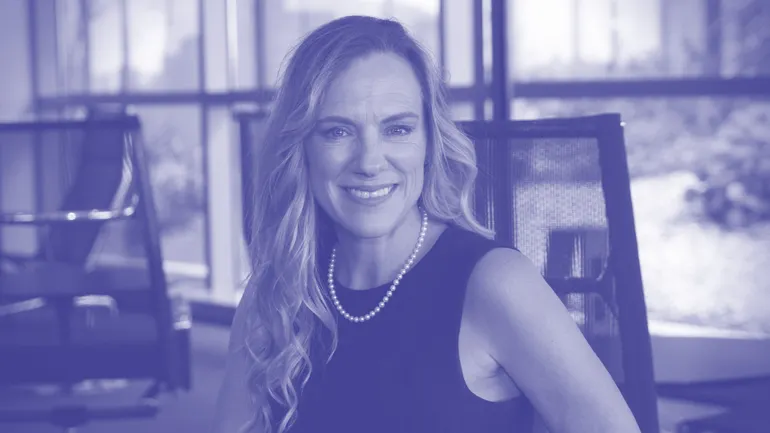
In an era when hip-hop and fax machines reigned—the so-called "good decade" was at its peak—Angela Pierce was deep into her investment banking career. She walked into a $5 billion syndicated loan deal with American Airlines, the only woman among 500 bankers on the floor.
Pierce wore a fake engagement ring (despite not yet receiving a proposal) to avoid being hit on, and chose a light pink suit instead of black or navy to put her colleagues at ease.
"I think women have a lot of advantages because we can put people at ease. In those environments, I didn't act like a man because I'm not one," said Pierce, now CFO of Austin, Texas-based tech company Anaconda, reflecting on her corporate banking experience in the '90s.
"My communication style was strong and aggressive—I would pound the table and speak loudly. I wanted people to know I wasn't weak, that I wasn't a flower," Pierce said.
Three decades later, more women are stepping into C-suite roles and making their mark in finance—for example, the National Football League (NFL) hired its first female CFO last week, and EV startup Nikola just named 36-year-old Stasy Pasterick as its new treasurer.
The share of female CFOs hit an all-time high of 16% in 2022, up from 6.3% in 2004, and the number of female CFOs has nearly doubled over the past decade, according to data from Crist|Kolder's recent Volatility Report.
"It's much better now. I think women are more confident and more outspoken than when I first graduated," Pierce said.
Maybe women in finance no longer need to fake an engagement, but according to Crist|Kolder data, women still make up less than one-fifth of CFOs at Fortune 500 and S&P 500 companies.
In honor of Women's History Month, CFO Dive spoke with four standout women in finance: Pierce, along with Zoom CFO Kelly Steckelberg, brand resale company Trove CFO Natalya Davick, and e.l.f. Beauty CFO Mandy Fields, about the challenges and rewards facing female finance chiefs today.
Though their paths to the top finance job differ, they offered the same advice: don't be afraid.
Don't be afraid to raise your hand
Fields graduated from Indiana University Bloomington's Kelley School of Business and began her career in investment banking on Wall Street, focusing on oil and gas. She took an early risk: applying for a promotion while pregnant, knowing that if she got it, she'd start the new role just one month before going on maternity leave. She got it.

"Instead of worrying about the added responsibility, I decided to embrace it. It taught me to never be afraid of rejection or to think something won't happen. I knew I had put in the time to determine whether I could handle the job—and I could—which gave me the confidence and drive to reach new career heights," Fields said.
Though Fields' ambition paid off, her career has also come with moments of self-doubt.
The current CFO of the Oakland, California-based beauty brand empire has always had a knack for numbers, but when she was offered her first CFO opportunity at retail company BevMo at age 35, Fields had doubts—"it didn't feel like me," she said. "I've always been confident in my abilities, but I fell into the trap of the 'checklist,' only seeing how many boxes I hadn't checked—rather than focusing on what I had already achieved," she said.
Self-doubt isn't uncommon among women in the workplace, especially in high-power roles like Fields'.
And it's not without reason: there are few peers like them. According to McKinsey & Company's 2022 Women in the Workplace report, for every 100 men promoted from entry-level to manager, only 87 women are promoted, and only 82 women of color.
Like Fields, Steckelberg also doubted her abilities early in her career when she took on an ambitious role.

The finance chief of the San Jose, California-based video communications platform—which exploded during the pandemic—began her career at KPMG in 1991 as an audit manager. She then got the opportunity to travel internationally with a company called PeopleSoft, which was later acquired by Oracle. Steckelberg went on to become CFO of WebEx and served as senior director of finance for the consumer segment at Cisco, before following a boss to online dating platform Zoosk in 2011.
It was at Zoosk that she found herself presented with the opportunity to take the top executive role of CEO—something she had never been offered before.
"The founder of the company told me on a Friday afternoon, 'Hey, we're transitioning, and the board is going to offer you the CEO job on Monday.' It completely caught me off guard. The first thought that came to mind wasn't 'yay' or 'awesome,' it was 'I don't know how to be a CEO.' Fortunately, I didn't say that out loud," Steckelberg said.
Then she stopped and reminded herself that she had daily ideas about how to improve the company. "This is your opportunity," she told herself.
Now, looking back at the decision to take the CEO role, Steckelberg believes it made her a better CFO.
"You don't have to know everything; I didn't know any specific area when I started, but I wanted to learn and figure it out," said Davick, CFO of Trove, a resale retail company that works with brands like lululemon and Canada Goose.

Davick knew from the start she wanted to be the finance leader. "I remember writing my business school applications in 2006-2007, and they asked: 'What do you want to be when you grow up?'" She wrote seriously: "I want to be a CFO."
Since those applications, Davick held finance leadership roles at Gap Inc., Google, and Twitter, until she landed her first CFO role at Palmetto in 2021. She was named CFO of Brisbane, California-based Trove this January.
"One piece of advice I have: recognize the immense power of your network, build your reputation, do good work, and maintain those relationships. From my first job obtained through an online resume submission, every job since has come through people I've worked with before," Davick said.
She noted that one issue for women is that they think they need to know all the answers and meet every qualification for a role before considering putting themselves forward. Men don't think that way.
Obstacles along the way
Today, women leaders are leaving the workforce at the highest rate ever—according to the McKinsey report, for every woman at the director level who is promoted to the next level, two women directors choose to leave their company.
While this may be a result of women demanding more from the workplace, underrepresentation in companies can hinder other aspiring women from advancing in their careers, especially in finance.
"Finance can be a demanding industry, and I think that's why some women shy away from leadership roles in the field. It's also still seen by many as a male-dominated area that's hard to break into," Fields said.
Steckelberg agreed, saying the biggest challenge for women in finance today is the lack of a mentor who looks like you. "I do place a lot of importance on being visible in my role, so other women can see what's possible. It takes effort. Most things aren't easy, but they're definitely achievable," she said.
Pierce said she sees emerging women in finance as more confident and assured than she was in the '90s, but she still feels a responsibility to look out for them.
"I still have an obligation to help women advance," she said.
Visual editor Shaun Lucas contributed to this story.