
FASB at Fifty: The Path of Transformation Under Pressure to Modernize GAAP
The Financial Accounting Standards Board (FASB), on its 50th anniversary, faces pressure to modernize due to the FTX collapse and investor criticism. Over the past year, FASB has accelerated rule-making and issued several new standards, but critics still argue progress is insufficient. This article analyzes the effectiveness and challenges of its reforms.
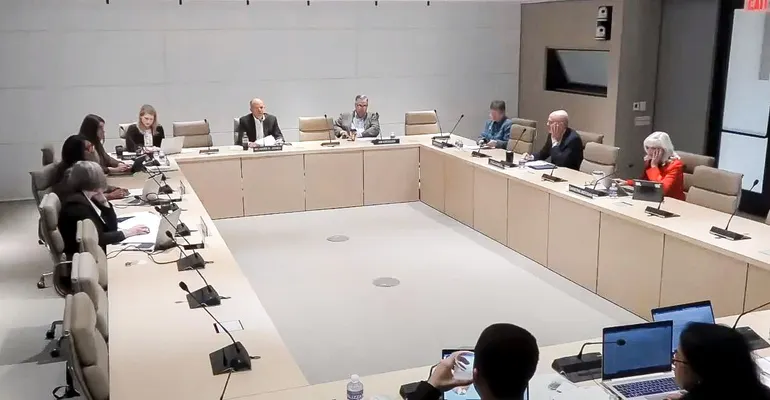
When the Financial Accounting Standards Board (FASB) began its 50th anniversary year in January, it was not in an advantageous position to celebrate easily.
Just two months earlier, the stunning collapse of Sam Bankman-Fried's cryptocurrency exchange FTX in November 2022 highlighted the scarcity of existing cryptocurrency regulation. FASB did finalize new cryptocurrency rules this month, but this move was delayed by a 2020 decision when the board temporarily shelved the topic, considering its scope insufficient to prioritize.
Previously, a report from the U.S. Securities and Exchange Commission's (SEC) Investor Advisory Committee recommended a review of theFASB's rulemaking process, pointing out the "slowness" of FASB's handling of significant standards and asserting that accounting rules both lag behind rapidly changing modern business practices and focus too much on reducing preparer burden rather than making financial reporting more useful to investors and other users.
Twelve months later, pressure on rulemaking persists: last week, FASB Chairman Richard Jones was summoned to a Capitol Hill hearing, where under questioning he acknowledged the board has not yet launched projects to define metrics such as same-store sales and carbon footprint. "Well," California Democratic Representative Brad Sherman joked, "you have a lot of work to do."
But as the anniversary year of the Norwalk, Connecticut-based standard-setting body draws to a close, there are signs that some changes are occurring: FASB is accelerating the pace and substance of rulemaking and expanding outreach to investors and other financial report users beyond the audit and accounting industry.
"I do feel a shift is happening," said Kecia Williams Smith, assistant professor of accounting at North Carolina Agricultural and Technical State University and a former deputy chief accountant at the Public Company Accounting Oversight Board (PCAOB). "They heard the criticism, and we see action. We see [accounting standards updates] being proposed and moving through the standard-setting process faster so they can respond to market dynamics."
"Actions speak louder than words"
Jones, who became FASB chairman in July 2020, leads a board that has shown a willingness to tackle more substantive or even controversial projects, many of which are described as "disaggregation" initiatives requiring companies to disclose more segment information in their reports.
Indeed, this year FASB issued nine new standards updates, compared to six in all of 2022, including one that adds specific (though narrow) guidance for certain crypto assets under generally accepted accounting principles (GAAP), and an update requiring companies to disclose more income tax data in financial reports.
Smith said that after years of being mired in the now-abandoned push to converge U.S. GAAP with international standards (an effort that largely failed around 2012), responding to the financial crisis, and focusing on several large projects like revenue recognition and leases in the 2010s, FASB essentially had to refocus and reinvent itself. Additionally, according to a FASB spokesperson, a significant accounting standards update involving credit losses on loans held by financial institutions and other organizations was issued in 2016.
"There was a period... where it felt their focus was on those areas rather than what was happening in the broader business environment," Smith said, adding that this has changed as the latest board has deliberately increased efforts to engage investors and academics.
Over the past 12 months, Smith said she has seen FASB act on some recommendations from the Investor Advisory Committee: for example, this year FASB made the codification containing GAAP freely available to all users, which facilitates research. She also noted that public roundtables have become more frequent.
FASB's shift was also noticed in February by SEC Chief Accountant Paul Munter, who cautiouslyreflected on the board's progress in developing more timely and meaningful standards, as evidenced by its reprioritized agenda.
"Under current leadership, FASB appears to have made certain notable improvements to its standard-setting process. In particular, FASB has undertaken to scope projects in a targeted manner so that they can be completed more timely," Munter said in a statement. "However, there is still more work to be done—including improving collaboration between FAF and FASB to achieve more timely standard-setting that responds to investor needs... Actions speak louder than words."
Middle-of-the-road approach
Despite the challenges, FASB has demonstrated a durability that its two predecessor standard-setting bodies did not possess.
Skepticism about the independence and industry bias of FASB's predecessor, the American Institute of Certified Public Accountants (AICPA) Accounting Principles Board, led to its dissolution, partly due to doubts raised "because it was housed within a professional association of auditors," according to the book "FASB" by Paul B. W. Miller and his co-authors Paul Bahnson and Rodney Redding.
Ultimately, a report by a committee led by former SEC commissioner Francis Wheat led to FASB's creation in 1973. Its foundational design aimed to promote independence from politics and industry: FASB is a private nonprofit organization funded by publication sales and fees paid by public companies, while being recognized by the SEC as the official accounting standard-setter.
As FASB's eighth chairman, Jones is a veteran of public accounting, having worked at Ernst & Young for over 28 years, eventually serving as chief accountant and partner, according to his LinkedIn profile. He has been committed to soliciting input from all stakeholders on what FASB should focus on, leading the 2021 agenda consultation outreach initiative that identified 40 improvement topics and showed a 300% increase in investor participation compared to the previous outreach five years earlier.
In a November interview, Jones pushed back against criticism that standards are outdated andstuck in the 20th century, a gap some believe emerged as the economy shifted toward services and technology, away from manufacturing. Jones agreed that business is always evolving and change is the "only constant," but he believes FASB is keeping up, citing new projects added to the agenda and the timing of its work, which he called "fairly rapid."
One of Jones's standard-setting strategies is to keep new standards narrow in scope to make them "achievable." He compared rulemaking to teaching a teenager to drive: they might initially swerve from one side of the road to the other, threatening to hit trees or oncoming vehicles. Similarly, if "we stay in the middle of the road," standard-setting goes more smoothly, he said. So, in the standard-setting metaphor, what does hitting a tree mean? "Failing to complete our standards," he said. "I'm not sure an unfinished standard benefits anyone."
CFO's grade
This middle-of-the-road approach is a difficult balance, leaving some investors and finance executives dissatisfied.
For example, in a 2021 letter to SEC Chairman Gary Gensler from the Alliance of Concerned Investors—an ad hoc group including former SEC regulators as well as academics and corporate executives—called FASB "slow as molasses"and warned that the flawed and outdated accounting standards that led to the Enron and WorldCom scandals had re-emerged. The letter said the board's composition should be changed to ensure a majority of members are investors and called for an independent review of FASB.
In an interview this month, Lynn Turner, a former SEC chief accountant who signed the letter, praised FASB's outreach efforts to investors, but he said little substantive change has occurred since the letter. For example, the new standard on how companies report segment information does not go far enough, he said.
"People want more detail on segment disclosures, and what did they do? Tell you who their main decision-maker is? So what," Turner said, asserting that the new segment standard does not provide the information needed to determine a company's value in financial models. "FASB struggles to develop standards that include the information investors are really looking for."
Meanwhile, finance executives preparing the new information required for reporting segments and new income tax data worry that FASB's requirements may go too far.
Alissa Vickery, chief accounting officer at Fleetcor, a payment company headquartered in Atlanta, Georgia, said in an email that she believes the information required by thenew segment standardis typically already captured by companies in their day-to-day operations. Nevertheless, the new income tax disclosures may require companies to rethink their processes to extract the required tax data. While Vickery said FASB is currently taking a "balanced approach" to standard-setting, she said continually expanding disclosure requirements are colliding with a growing shortage of accounting talent.
"This raises inherent concerns about whether public entities can keep up with auditor and standard-setter demands in a high-quality manner while meeting our financial goals and filing deadlines," Vickery wrote.
Similarly, Reed Mallek, chief financial officer of Ratio Therapeutics, a Boston-based biotech startup, is not entirely satisfied with FASB's standards. For example, the lease accounting standard under ASC 842, which recently took effect for private companies, makes sense on paper but is burdensome to comply with, running about 100 pages long by his estimate. He would prefer FASB to develop clearer, more principles-based standards similar to International Financial Reporting Standards (IFRS).
"These things are overly complex," Mallek said, giving FASB's rulemaking efforts a grade of B- while expressing understanding of the constraints the board faces. "They have to go to Congress and explain what they've done for their constituents, who are often screaming investors: 'How could Tyco happen, how could WorldCom happen?'... I'm sure it's an impossible job."
Editor's note: This story has been updated to include comment on the credit losses accounting standards update issued by FASB in 2016.