
OpenAI's $6.6 Billion Funding: Can It Sustain Its Leading Position Remains Uncertain
OpenAI recently completed a $6.6 billion funding round, raising its valuation to $157 billion, but it is expected to lose about $5 billion this year, facing challenges such as executive departures, intensifying competition, and difficulties in data acquisition. Experts point out that whether the company can continue to lead not only concerns itself but also affects investment confidence across the generative AI field.
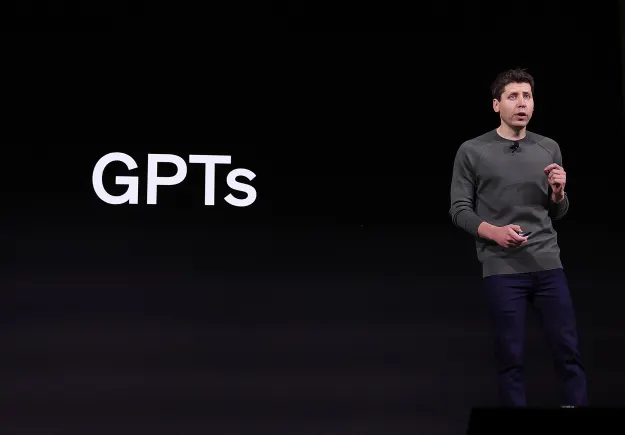
OpenAI's $6.6 billion funding round could become a "Pyrrhic victory" for the company synonymous with generative AI—potentially sounding an alarm for the entire emerging GenAI industry.
In early October, the Microsoft-backed enterprise completed its highly anticipated funding round, securing ample cash to train its latest GenAI models and test new products. Participants included Nvidia, Thrive Capital, and SoftBank, according to the company,bringing its valuation to $157 billion. However, even if this becomesone of the largest funding rounds for a private company, investors and industry experts are already discussingwhether this $6.6 billion is sufficient tosecure OpenAI's long-term future.
Although the developer of ChatGPT reports significant revenue growth over the past year, according to financial documents seen by The New York Times, the company expects tolose about $5 billion by year-end, with losses involving costs such as product operations.
During the funding round, company leadership also experienced turmoil. Although CFO Sarah Friar was a key driver of the fundraising, several executives, including the CTO and two senior researchers, departed in September, just days before the round closed. Additionally, OpenAI faces intensifying competition from well-funded rivals thatcan even rival its main backer Microsoft, such as Google parent Alphabet and Mark Zuckerberg's Meta.
Experts told CFO Dive that the funding round exposed multiple concerns in OpenAI's business, including funding issues, potential challenges to revenue and profitability, return-on-investment difficulties, and lingering issues around data ownership and privacy. As the most prominent and best-funded GenAI company, OpenAI's obstacles may not only signal its own struggles but also foreshadow clouds over the entire GenAI sector.
For many enterprises, the task of gauging the direction will fall on CFOs, who must decide where company funds are allocated. And for many finance executives, the GenAI halo has been dimming for months.
The funding wheels keep turning
Admittedly, the GenAI spotlight has not noticeably dimmed. Besides the $6.6 billion OpenAI secured, AI startup funding reached $19 billion in the third quarter, accounting for28% of all venture capital, according to Crunchbase data. Meanwhile, CFO Dive recently reported, citing EY data, that the number of U.S. companies willing to invest $10 million or more in GenAI isexpected to double by 2025。
Despite the still-strong funding environment, investors and CFOs considering adopting the technology are starting to ask deeper questions about target companies before opening their wallets. Mark Schwartz, EY's leader for IPO and SPAC advisory at the Big Four accounting firm, said many companies are emerging "packaging what they've always been doing with new terms like AI and machine learning. But how much of what they're really doing differs from past algorithmic work?"
Understanding this distinction is crucial for investors evaluating which AI-driven companies are worth backing. Schwartz said in an interview: "Investors are very eager to understand the technology, to judge whether it's truly novel, truly revolutionary, rather than old wine in new bottles."
The need to distinguish truly revolutionary companies has begun to show in venture capital: according to Crunchbase, the $19 billion AI startups raised is down from $23.4 billion in the previous quarter, anddeal volume fell 22% in the third quarter, dropping to 947 rounds from 1,211 in the second quarter.
Crunchbase reported this "may mean more large deals are flowing to more mature AI startups (or at least those able to convince investors of their AI strength), while early-stage seed and Series A deals for younger startups decline."
Schwartz, speaking about investor views on GenAI, said: "I think beneath the giants, there's a lot of due diligence going on." Some companies with differentiated advantages still attract strong private-market attention, but "other companies struggle when investors look deeper."
For startups, the world's largest GenAI player may be a poor role model. With projected losses of $5 billion this year, its $6.6 billion funding round may just be one step in a long funding sequence—sucking up venture capital and making investors more wary of other AI-driven companies.
In fact, given the current burn rate, OpenAI will likely need to complete a similar funding round in 2025 at a valuation higher thanthe current $157 billion, tech journalist Ed Zitron predicted in his October 2 newsletter.
Matt Cotter, CEO of AP automation software provider Pairsoft, said: "I think if you're a startup trying to raise huge funding based on AI, you'd be angry at Sam Altman. Because those guys keep cashing checks, and now everyone's looking at you and saying, 'Wait, they're already there, and now I can see their financials.'"
ChatGPT, show me the money
Thanks to the new funding, OpenAI now hasabout $10 billion in liquidity, including the $6.6 billion round and a $4 billion credit line with banks such as Goldman Sachs and JPMorgan, the company announced. OpenAI also expects revenue to keep soaring, estimating it will reach $11.6 billion next year—while, according to The New York Times,expected annual sales this year are $3.7 billion。
However, revenue growth comes hand in hand with rising costs, a key challenge in achieving the $11.6 billion annual revenue target.
GenAI companies like OpenAI also face rising costs for customer acquisition, computing power, and infrastructure. Computing power remains one of OpenAI's biggest cost drivers, and its demand may exceedthe supply capacity of its main backer Microsoft—Microsoft reportedly failed to provide electricity fast enough, leading OpenAI to turn to other potential sources like Oracle.
Part of the problem is that the company's main cost driver is also its main revenue source. Currently, its largest revenue stream is subscriptions to the ChatGPT product, with about 10 million users paying roughly $20 per month, and the company expects to raise prices to $44 over the next five years, according to The New York Times.
Cotter said: "I think someone has to figure out, and I don't think anyone has yet, how to change that ratio. Revenue is growing exponentially, which is very attractive, but costs are also growing exponentially because we haven't cracked how to deploy all this infrastructure, computing power, and talent."
Overall, OpenAI expects ChatGPT to generate $2.7 billion in revenue this year. Adding subscribers means more revenue, but the computing power needed to generate queries for users will quicklyturn new users into cost centers, Zitron wrote in his October 2 newsletter.
Its other major revenue source is selling products to enterprises, expected to generate $1 billion by year-end. However, this enterprise figure may be the biggest stain on the company's future and also affects the technology's ability to attract capital.
Zitron wrote: "This indicates a fundamental weakness in the revenue model behind GPT, and also a fundamental weakness in the generative AI market overall. If OpenAI can't make more than $1 billion from it, then it's reasonable to assume either developers lack interest, or the consumers developers serve lack interest."
Price increases may also exacerbate what Zitron calls a "subprime AI crisis," as he wrote in his September 16 newsletter: "Thousands of companies have integrated generative AI at prices far from stable, or even far from profitable."
The focus on OpenAI has also prompted companies to allocate more budget to the technology, driving up capital expenditures, which may be unsustainable for smaller firms.
Dan Ives, managing director and senior equity research analyst at Wedbush Securities, said in an October 3 report: "OpenAI has been a key cornerstone of the AI thesis, and ChatGPT is the 'iPhone moment' that introduced generative AI to enterprises and consumers. Now we're seeing $1 trillion in AI capital expenditures over the next three years, and OpenAI is key to the success and adoption of AI for Nvidia, Microsoft, Google, and the entire tech world."
Keeping an eye on ROI
The close scrutiny of OpenAI's revenue model by investors, industry leaders, and technology experts reflects a growing demand for specifics rather than potential.
CFOs and their executive colleagues want to see clear use cases for the technology, as well as ways to ensure positive ROI on AI spending. Analysts like Sequoia Capital partner David Cahn haveurged caution in the AI gold rush, with those keeping a "cool head" able to build stable companies, CFO Dive previously reported.
Schwartz said: "For investors, what we're hearing is that at a very high level, there are many unknowns about how powerful and revolutionary this can be. I think this AI revolution has the potential to completely change everything. Right now, we're in the discovery phase, trying to figure out how impactful it will be." However, the "lack of clarity in market valuations" indicates the field is still in its early stages, with leaders still figuring out the best way forward.
For finance executives, the GenAI discussion has gradually shifted from "silver bullet" to "patch"—that is, solutions that address specific problems and are developed accordingly. Cotter said: "Actually, focusing on practicality, focusing on targeted solutions, in the world I'm in... will be the winning strategy."
Staying calm is one thing; getting the desired ROI from GenAI within investors' expected time frame may be another, especially when GenAI companies themselves face challenges in growing revenue. Developing targeted solutions takes significant time, although "ultimately they'll be stickier," Cotter said, "and ultimately you'll get a premium for them. The problem is, they won't happen in a month."
Even if leaders isolate specific use cases and projects, "I still don't think that says someone has cracked the code on 'how to change the revenue-to-cost ratio,'" Cotter said. "If I took a $6.6 billion funding round, 'give it time' might not be the argument anyone wants to see."
The 'data coal' of the GenAI fire
OpenAI already faces numerous challenges, but its final hurdle may be the most fatal: data. While the company faces profitability challenges, a lack of substantial profits is not a fatal flaw for enterprises, especially in tech; the "move fast and break things" approach worked for companies like Uber, which succeeded on waves of venture capital before turning profitable.
But behind every Uber is a WeWork: while OpenAI may attract more funding, buying time to adjust its cost-to-revenue ratio to a more balanced level, it may face supply issues. In short, to do all this,the company needs data。
ChatGPT and other large language models need vast amounts of data to grow, but obtaining data is not easy. First, given current LLM training demands, "industry demand for high-quality text data could outpace supply within two years, potentially slowing AI development," The Wall Street Journal wrote in an April report.
Beyond supply issues, GenAI companies also face barriers to accessing existing data. Many companiesdo not store information in formats easily accessible to AI tools, meaning they need to invest more time and money in reformatting. Additionally, OpenAI has alreadyfaced multiple lawsuitsover accessing protected information, raising data privacy and ownership issues as GenAI use expands.
Cotter said: "Data sourcing will be a life-or-death issue for OpenAI. It's the fuel for the factory. If it's cut off, whether legally or technically, a company like OpenAI is done... It's completely dependent on data. But the process of cutting it off is very murky."
However, the data issue is just another open problem OpenAI needs to solve to ease investor concerns. Ultimately, OpenAI's fate may also decouple from the broader GenAI sector, with other players potentially rising to take the "iPhone moment" from the creators of ChatGPT.
But for finance executives, these cracks may signal that a careful audit of GenAI is urgently needed—perhaps, it should be done the old-fashioned way.