
Treasury

Weak manufacturing demand drags down U.S. leading economic indicators, Conference Board lowers growth forecast
The Conference Board reported on Monday that the U.S. leading economic index fell month-over-month in September, with weak manufacturing demand, reduced building permits, and declining consumer confidence offsetting some growth signals. Despite retail sales exceeding expectations and upward revisions to GDP growth estimates, the organization expects only modest economic expansion from late 2024 to early 2025. Federal Reserve officials emphasized that policy will depend on data, and market expectations for the magnitude of a November rate cut have dropped from 50 basis points to 25 basis points.

Retail sales growth exceeded expectations, highlighting the steady state of the U.S. economy in 2024
U.S. retail sales rose 0.4% month-over-month in September, exceeding expectations, showing consumer resilience and prompting several institutions to raise their 2024 economic growth forecasts.

NYSE Proposes Tighter Reverse Stock Split Regulation to Curb Consecutive Consolidations Evading Delisting
The New York Stock Exchange submitted a rule amendment proposal on October 10, aiming to impose stricter delisting standards on companies that maintain share price compliance through reverse stock splits. If a company has already implemented a reverse stock split within the past year, or has accumulated a consolidation ratio of 200:1 or higher over two years, its shares will face suspension and delisting if they fall below $1 again. This proposal aligns with Nasdaq's previously tightened regulatory direction, aiming to prevent financially distressed companies from concealing operational risks through repeated consolidations.

Female CFOs and CEOs in S&P 500 Outearn Male Counterparts
The Conference Board reported on Monday that among S&P 500 companies, the median compensation for female CEOs and CFOs this year will be at least 5% higher than their male counterparts. The report notes that although women still hold a much smaller share of top executive roles, companies are offering more competitive compensation packages to attract and retain scarce female leadership talent.

The Persistent Problem of Paper Checks in Healthcare
The flaws of paper checks have sparked widespread discussion, yet the healthcare industry remains entrenched in this outdated payment method. This article points out that paper checks not only cause financial waste but also pose a risk in an era of rampant check fraud, while dragging down patient satisfaction. Digital payments offer cost savings, efficiency gains, enhanced security, and data value, making them a necessary choice for healthcare providers to maintain competitiveness.

Core CPI rises 3.3% year-on-year, exceeding expectations; Fed may only cut rates by 25 basis points next month
Data from the U.S. Bureau of Labor Statistics shows that core CPI rose 3.3% year-on-year in September, exceeding expectations, driven mainly by costs for housing, clothing, and auto insurance. The market expects the Fed to cut rates by 25 basis points at its November meeting, rather than a larger cut.

PwC survey: Most executives believe US competitiveness will be damaged regardless of who wins the election
A PwC survey released on Wednesday shows that 71% of C-suite executives believe that, regardless of the outcome of the November 5 presidential election, post-election trade and tax policies will damage US competitiveness. 76% of executives expect a divided government, and 61% predict an economic recession in the next six months. Cybersecurity risk remains the top risk, mentioned by 75% of executives.

U.S. Small Business Uncertainty Index Hits 38-Year High: NFIB Survey Reveals Dual Pressures of Financing Costs and Inflation
The latest monthly survey by the National Federation of Independent Business (NFIB) shows that uncertainty among small business owners about business prospects over the next six months has reached the highest level since the organization began tracking it 38 years ago. Chief Economist Bill Dunkelberg noted that inflation and high financing costs continue to erode profits. The survey also found that the proportion of businesses reporting increased inventories fell to its lowest since June 2020, and the average short-term loan interest rate rose to 10.1%, the highest since February 2001. Despite the Federal Reserve's 50-basis-point rate cut on September 18, the 10-year Treasury yield rose instead of falling, significantly cooling market expectations for further rate cuts within the year.
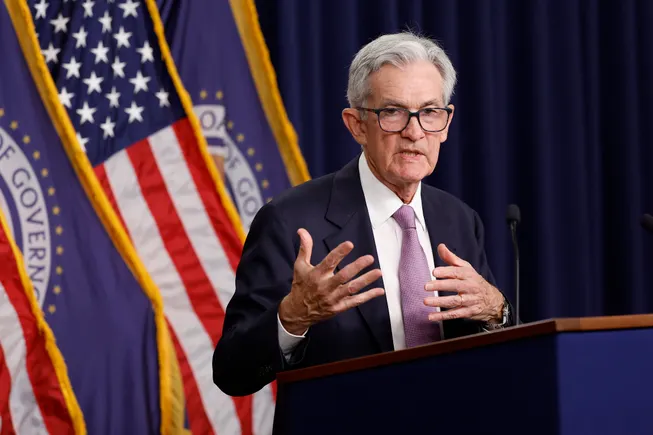
Three CFOs Interpret the Impact of the Rate Cut: Debt Strategy, Cash Management, and M&A Outlook
Following the Federal Reserve's 50-basis-point cut to the benchmark rate on September 18, several CFOs quickly adjusted cash flow forecasts for floating-rate debt while reviewing long-term strategies. Tom Panther of Corpay, Omar Choucair of Trintech, and Jim Cox of Clearwater Analytics each offered views on interest rate swaps, extending investment duration, and M&A expectations.

Fed Chair Powell: Policymakers 'in no hurry' to cut interest rates
Fed Chair Powell said on Monday that the central bank does not need to cut interest rates quickly, and the magnitude of future cuts will depend on economic growth. The Federal Open Market Committee is 'in no hurry' to act quickly, and could accelerate cuts if the economy slows more than expected, or slow them otherwise.