
Three CFOs Interpret the Impact of the Rate Cut: Debt Strategy, Cash Management, and M&A Outlook
Following the Federal Reserve's 50-basis-point cut to the benchmark rate on September 18, several CFOs quickly adjusted cash flow forecasts for floating-rate debt while reviewing long-term strategies. Tom Panther of Corpay, Omar Choucair of Trintech, and Jim Cox of Clearwater Analytics each offered views on interest rate swaps, extending investment duration, and M&A expectations.
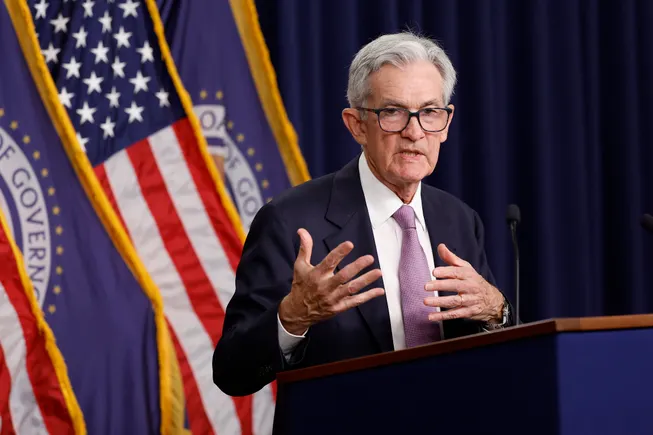
After the Federal Reserve on September 18cut its benchmark interest rate by 50 basis points,many finance chiefs quickly felt financial relief: CFOs at companies with floating-rate debt immediately adjusted their cash flow forecasts to reflect lower interest expenses, said Nick Araco Jr., CEO of The CFO Alliance, a subscription-based peer network for finance leaders.
Other finance chiefs looked beyond the single cut to its slower, rolling impact on long-term strategy, while also seeing in the Fed's projections a signal of a new era of lower rates—the Fed expects the federal funds rate to fall to3.4% next year and 2.9% in 2026.。
"If you look at the dot plot for the end of this year and next year, [the Fed] is projecting to get to around 3%... I think that would be a 'Goldilocks' type of environment for us," said Tom Panther, CFO of payments company Corpay, noting that would mean the Fed doesn't need to over-cut or stay restrictive. Lower rates also provide clarity on the economy's "direction of travel" and help Corpay's customer growth. "What the Fed has articulated and signaled is that they're going to go on a downward glide path, which is favorable for us," he said.
Exactly what happens next, and how this tailwind and other aftershocks of the cut will boost or pressure finance teams, may take time to materialize. Several CFOs told CFO Dive they have not yet adjusted their debt structures due to the cut, but are examining the new opportunities that lower capital costs generally present for their future strategies. CFOs are considering their debt and cash positions, hedging and M&A strategies, and the reactions of their own customers.
"Most CFOs are currently monitoring changes in supplier and customer behavior before seizing larger opportunities or mitigating long-term risks associated with rapidly changing financial conditions," Araco said in an email response.
CFO Dive spoke with Panther, CFO of Atlanta-based payments company Corpay; Omar Choucair, CFO of Dallas-based financial close software provider Trintech; and Jim Cox, CFO of Boise, Idaho-based investment accounting solutions provider Clearwater Analytics, about how they are thinking about debt and strategy after the cut.
No need to 'correct course'
Panther said Corpay will save about $15 million annually due to the 50-basis-point cut (after accounting for interest rate swaps), as the cost of its floating-rate debt decreases. As of June 30, the company had approximately$7.3 billionin debt on its balance sheet, with $3.54 billion in cash, cash equivalents, and restricted cash, according to its annual report.

All of the company's debt is tied to the floating Secured Overnight Financing Rate (SOFR) benchmark. But Panther said the company has protected itself from interest rate fluctuations since around 2019 through the use of hedges or interest rate swaps. Panther said in the interview that the company's swap strategy effectively converts about $4 billion of its debt into fixed-rate credit, agreeing to pay a fixed blended rate of about 4%.
For now, the company is keeping the swaps in place rather than unwinding them, because the position is "still in the money," even though its positive spread has narrowed after the cut, Panther said. "We don't view interest rate swaps purely as a process of reducing interest costs," Panther said, noting they are a risk management technique that keeps interest expenses at a comfortable level.
"We want to run the company as a corporate payments company, and we don't want to be at the mercy of interest rate market fluctuations, so we try to design the balance sheet to again lean into rates coming down, because we think that's where the wind is blowing, but we don't wake up every day trying to guess what rates are going to do," he said.
Looking ahead, Panther is in no rush to unwind those swaps or refinance the term loans, which don't mature until 2027 and 2028. "Part of the reason we're not in a rush to do something different is that this is all within the expectations of what we've analyzed and modeled," Panther said of the Fed's cut. "So we don't need to make a course correction."
Moving to longer duration
For now, Clearwater's CFO Cox said the company has far more cash than debt and has no refinancing plans in the new lower-rate environment.
As of June 30, the company reported adebt balance of $48.1 millionunder its new credit agreement, versus $297.6 million in cash, cash equivalents, and investments, according to securities filings. Cox expects to refinance the floating-rate debt, which is tied to SOFR plus a 1.75% margin, in about two years.

"I'm not worried about it right now, because I believe rates will continue to decline into 2026, so we'll wait and expect to refinance closer to the maturity of the debt," Cox said in an interview, adding he believes the company could obtain financing for 10 times its current debt if it chose to do so now. "We would only refinance if we were doing something strategic that required borrowing."
Where Cox has made adjustments due to falling rates is on the asset side of its portfolio. The shift is partly tied to the inverted yield curve—arelatively rare situationwhere short-term yields are higher than long-term ones due to market expectations of slower growth or recession in the future—which had persisted since 2022 until recently, according to Morningstar.
Cox said Clearwater and many other companies began shifting investments in early summer into instruments with longer durations that now pay more, extending average maturities from 12 months to about 18 months. For example, Clearwater'stotal long-term debtrose to $39.7 million as of June 30 from $21.4 million at the end of 2023, while total short-term investments fell to $67.8 million from $74.4 million over the same period, according to the company's 10-K.
"Basically, what happened is that as investments matured, corporate treasurers didn't replace those investments with assets of the same duration," because everyone was anticipating rate cuts, Cox said, adding that with the Fed's cut, companies are again earning more returns, largely due to longer-term investments. At Clearwater, Cox said he will continue this change. "We made that shift in the first half, but it's not complete yet," he said.
Sparking M&A
Private company Trintech falls into the camp of not changing its capital allocation or operating strategy after the cut, because the cut was already anticipated, CFO Choucair said. But he does expect the Fed's action itself will eventually spark market deals.

"Although the market had largely priced in the recent rate cut, many finance executives appreciate the certainty of a 50-basis-point cut," Choucair said in an email response. "As a result, management teams may be more aggressive in refinancing existing debt, accelerating M&A plans, and reviewing more aggressive capital allocation as they review near-term forecasts."
Moves Choucair anticipates include: large companies will continue to use the commercial paper market to strengthen balance sheets, while some mid-sized companies will restart refinancing conversations with banks. The impact of many moves won't be immediate: companies may have to wait until next year to see the benefits of lower rates in after-tax cash flow, he said.