
Deep Dive
来自我们记者的行业洞察

CFOs Urged Not to Delay LIBOR Transition Plans
Against the backdrop of LIBOR's impending exit, regulators and industry organizations urge CFOs to act early. Delay may lead to crowded-out customer negotiations, legal disputes, and reputational damage. ARRC has selected SOFR as the replacement rate, but the transition involves a large number of legacy contracts that require a systematic response.

U.S. Tax Reform Legislative Correction: Qualified Improvement Property Regains 15-Year Depreciation Period and Accelerated Depreciation Benefits
The U.S. Congress passed the CARES Act to retroactively correct the drafting error in the Tax Cuts and Jobs Act regarding Qualified Improvement Property (QIP), restoring its 15-year depreciation period and making it eligible for 100% bonus depreciation. Businesses can claim refunds or change accounting methods for QIP placed in service in 2018 and later, but must comprehensively evaluate the cascading effects on other provisions such as NOL carryforwards and interest expense.

After the CFO Departs, Who Will Take the Helm?
COVID-19 may usher in an era of unexpected turnover among finance executives. An analysis of 50 CFO transitions by CFO Dive shows that 75% of successors are internal, with most having strategic and operational experience. However, as CFO responsibilities shift toward strategy and operations, formal succession plans are becoming less common, and the probability of interim CFOs being promoted permanently ranges from about 10% to one-third. Executive search experts point out that the CFO role is evolving from an accounting-technical focus to an 'operational finance' orientation, and the disappearance of the COO position has further amplified the CFO's strategic weight.

Needs Determination and Eligibility Review: Key to Avoiding PPP Loan Liability Risks
Amid the economic impact of the COVID-19 pandemic, the rigor of needs determination and eligibility review when businesses apply for Paycheck Protection Program (PPP) loans directly affects their legal liability risks. Based on insights from Annie Railton, a partner at Goodwin law firm, this article analyzes the oversight structure under the CARES Act, three key review focuses, legal consequences of false claims, and specific measures to mitigate risks, emphasizing the importance of thoroughly documenting decision-making processes and acting in good faith.

Impairment Testing of Goodwill under COVID-19: Challenges and Response Strategies
The economic uncertainty caused by COVID-19 has made fair value and future cash flow forecasting in goodwill impairment testing particularly complex. This article outlines the two calculation methods for impairment testing, key points for identifying triggering events, fair value assessment amid market turmoil, the application of scenario analysis, and the necessity for companies to explain impairment judgments to shareholders.

Capital Stewardship for Revenue-Free Biopharmaceutical Companies: CFO Financial Strategies
Facing increasingly stringent market scrutiny, CFOs of revenue-free biopharmaceutical companies are adopting multiple strategies to protect capital: utilizing overseas cash refunds, AI-accelerated R&D, and simplified capital structures. Through case studies of INmune Bio, AVROBIO, and BioXcel Therapeutics, this article reveals how CFOs become efficient stewards of capital.

XBRL Financial Reporting Matures, Accuracy Becomes a Focus
Extensible Business Reporting Language (XBRL), adopted by the U.S. Securities and Exchange Commission (SEC) in 2008, has become the standardized format for financial report submissions by public companies, mutual funds, and credit rating agencies. As the technology matures in application, regulators and investors have increasingly focused on data accuracy. Experts warn that tagging errors may damage corporate credibility and recommend that companies strengthen internal controls and review processes.

CFO Perspective: How to Be Acquired in a Market of 'Snack Mergers Acquiring Snack Mergers'
Amid the wave of mergers and acquisitions in the food industry, how can small companies position themselves to attract giants? This article, drawing on cases such as Hershey's acquisition of Amplify and Kellogg's acquisition of RXBar, along with practical experience from multiple financial executives, provides CFOs with a strategic preparation guide before being acquired.

New Goodwill Impairment Rules Take Effect: How CFOs Can Simplify Complexity and Plan Ahead
The latest revision to the goodwill impairment accounting standard (ASU 2017-04) has taken effect in phases, eliminating the second step of the previous two-step method and instead directly recognizing impairment based on the difference between a reporting unit's carrying amount and fair value. The new rule simplifies the process but imposes new requirements on strategic planning, disclosures, and audit communication. Drawing on expert perspectives, this article recommends that CFOs initiate testing early, review historical data, reference early adopters' disclosures, and maintain close collaboration with auditors and the audit committee.
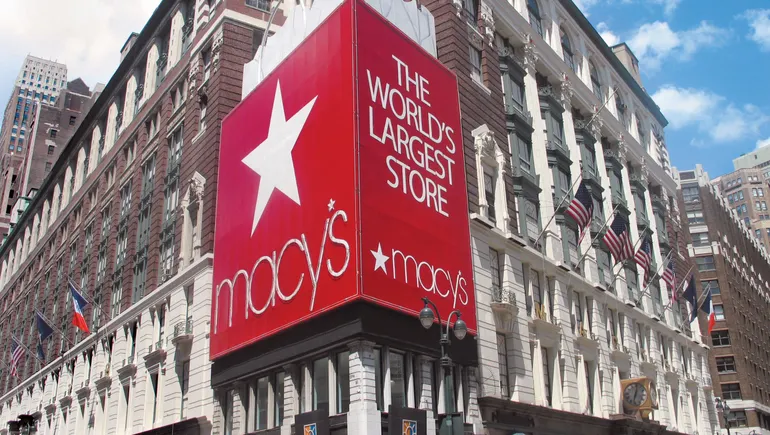
New credit loss accounting standard expected to impact retail credit card revenue
The new credit loss accounting standard (CECL) requires banks to estimate and reserve for losses based on the entire life cycle of loans, changing the previous practice of only addressing loans with identified issues, typically over a 12-month period. Morgan Stanley analysts believe this change will increase volatility in bank reserve provisions, raise costs for new loans, and particularly impact retailers that rely on in-store credit cards, such as Macy's, Kohl's, and Nordstrom. Large banks have implemented the standard since 2020, while community banks and credit unions have deferred it to 2023. Banking groups attempted to delay or modify the standard but only obtained a partial extension.