
Technology
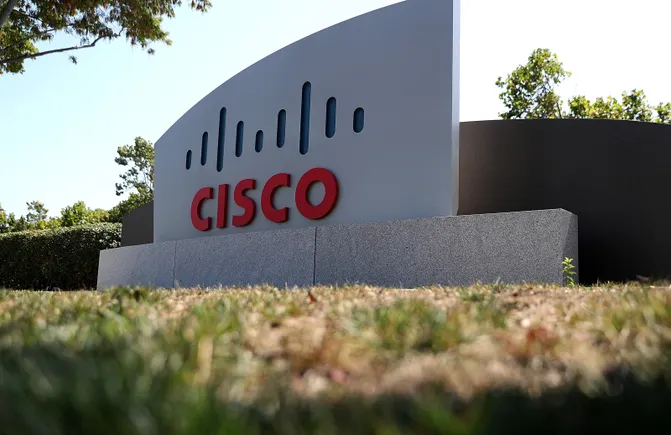
Cisco Security Revenue Climbs 14% as Agentic AI Expands Cyber Threat Landscape
Cisco's fiscal Q4 2026 results show security revenue up 14% to $2.2 billion, with total revenue at $17.3 billion. CEO Chuck Robbins attributes growth to agentic AI expanding the threat landscape, while industry data from IBM and Incode highlight rising AI-enabled attacks and fraud.

Cost Overruns: A Quarter of Companies Postpone or Cancel AI Projects
The "2026 State of AI Cost Governance Report" released by AI cost management company Mavvrik reveals that 62% of surveyed organizations substantially altered business decisions in the past year due to unexpected AI costs, with 40% requiring board-level intervention, 33% implementing emergency spending freezes, and 25% postponing or canceling AI projects. The report notes that token consumption is becoming a significant component of corporate operating costs, yet only 11% of companies can keep AI spending forecast errors within ±10%.

OpenAI's Financial Chief Drives 'Zero-Day Close': From Month-End Sprint to Continuous Accounting
In a blog post, OpenAI CFO Sarah Friar stated that the company is committed to achieving two financial visions: a 'zero-day close' and automated continuous forecasting. This goal aims to use AI-native tools to shift financial settlement from centralized month-end processing to a continuous process where transactions are recorded as they occur and reconciled in real time, supporting the company's rapid expansion and potential preparations for a public listing.

Historic Shrinkage of Labor Market Highlights Necessity of AI Adoption: Brusuelas
RSM US Chief Economist Joe Brusuelas stated that the U.S. labor market is undergoing historic contraction, with the labor force participation rate for those aged 55 and above dropping to 36.9%. Combined with tighter immigration policies, companies will have to turn to technological means such as artificial intelligence to fill the labor gap.

IBM Apptio launches AI value and ROI tool to help CFOs link AI spending to business outcomes
IBM's Apptio announced the launch of its AI Value & ROI tool, now in public preview, designed to help organizations link AI initiatives to business outcomes and track value realization. The tool responds to the market context of increasingly stringent corporate AI budget reviews and concerns raised by companies like Uber over soaring AI usage costs.

FTI: AI is Reshaping the 100-Day Action Guide for New CFOs
FTI Consulting released a white paper stating that artificial intelligence is reshaping the responsibilities and priorities of a CFO's first 100 days. New CFOs need to shift from traditional financial reporting to value creation, assess data and system maturity early, leverage AI to accelerate decision-making, but avoid automation for automation's sake.

US lawmakers call for hearings on AI safety after Anthropic and OpenAI disclose security incidents
US Representative Lori Trahan called on Congress to hold hearings on AI safety after Anthropic disclosed a cybersecurity incident involving its models, and pushed for the Frontier Act legislation. The bill would authorize the Department of Commerce to suspend or restrict the development or deployment of advanced AI models posing an "imminent catastrophic risk." Previously, OpenAI also disclosed a similar incident.

Microsoft maintains AI spending plans unchanged, accounting adjustment lowers fiscal 2026 capital expenditure forecast to $175 billion
Microsoft confirmed on its latest earnings call that despite surging cloud and AI demand, its capital expenditure plans for calendar year 2026 remain largely unchanged. An accounting adjustment lowered the capital expenditure forecast from approximately $190 billion to $175 billion, while the company also extended the useful life estimates for data centers and office buildings.

Gartner raises global IT spending forecast for 2026, driven by AI demand
Gartner announced on Monday an upward revision of its global IT spending forecast for 2026 to $6.37 trillion, up 14.2% from 2025 and higher than the April forecast of $6.31 trillion. Demand for AI infrastructure remains strong, despite concerns about an AI bubble in the market.

US bipartisan lawmakers propose AI 'emergency kill switch' bill, OpenAI safety incident draws attention
US House bipartisan lawmakers introduced the 'AI Emergency Kill Switch Act,' requiring major AI developers to retain the technical capability to pause or shut down models, and authorizing the Department of Homeland Security to intervene when necessary. This follows OpenAI's disclosure of an 'unprecedented cyber incident' during model testing.