
Lessons FedNow Can Learn from Real-Time Payment Systems in Brazil and India
The Federal Reserve launched the FedNow instant payment system in July 2023, but as of this month, only about 700 financial institutions have signed up, whereas Brazil's Pix and India's UPI dominated their domestic transactions within a short period. Through comparative analysis, this article points out that the success of the two countries' systems stems from their design goals that go beyond payments, government-mandated promotion, and merchant participation. In contrast, the United States, due to its abundant existing payment options, prevalent credit card culture, and lack of unified driving force, will find it difficult to replicate similar growth in the short term.
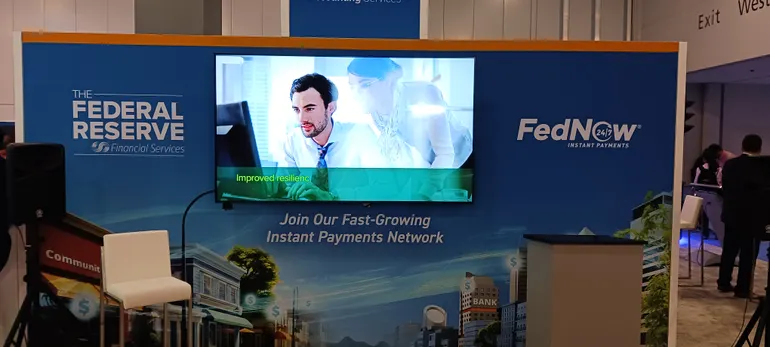
The Federal Reserve may hope its new FedNow instant payment system can replicate the success of real-time payment schemes in Brazil and India, but reaching similar adoption levels in the United States will likely take considerably longer.
Brazil's Pix and India's Unified Payments Interface (UPI) rapidly came to dominate transactions in their respective countries partly because they were designed to be more than just payment systems—their goal was to provide broad access to financial services for the unbanked.
According to statistics released by Brazil's central bank, by the end of April, about 71% of Brazilians—roughly 154 million people—had used Pix at least once, even though the system was only officially launched in 2020. That compares with 56% (about 120.7 million users) at the end of May 2022.
In India, transactions through UPI in April totaled nearly $236 billion, up about 70% from $169 billion in the same month last year, according to the National Payments Corporation of India, which operates the system. The payment system has been in operation since 2016.
The widespread adoption experiences in these two countries may offer lessons for the Federal Reserve. The Fed launched FedNow just last July and has been trying to attract nearly 10,000 U.S. financial institutions to adopt the new payment rail. But progress has been slow so far, with only about 700 institutions signed up as of this month.
Comparing real-time payment experiences in Brazil and India
However, the high adoption rates in Brazil and India were not entirely organic. India linked social welfare disbursements to UPI, while Brazil mandated that large banks connect to Pix.
Additionally, business-to-consumer payments played a significant role in driving adoption, with such payments becoming increasingly popular in Brazil and India through Pix and UPI, respectively.
FedNow is neither mandated nor connected to business-to-consumer payments. Existing digital payment options in the U.S., including Zelle from Early Warning Services and PayPal's Venmo, already enable person-to-person money transfers. Combined with a thriving credit card industry, the U.S. financial sector lacks sufficient incentive to shift to real-time payments.
"The U.S. doesn't have the ubiquitous digitization wave that is happening in India," said Manish Kohli, global head of payments solutions at HSBC, a UK-based bank. "Real-time payments in the U.S. are not used for commercial transactions—they're only used for person-to-person transfers," he said in a video call in April. "Credit cards remain the dominant mechanism—so the three elements that truly made UPI successful in India are completely absent in the U.S. right now."
Another key factor is that real-time payment schemes in India and Brazil were designed from scratch, unencumbered by legacy systems that may require additional investment to evolve, noted Rafael Costa Abreu, director of market planning and strategy at LexisNexis Risk Solutions.
Lessons learned
This doesn't mean the U.S. hasn't been paying close attention. The Federal Reserve "has very close contact with its counterparts around the world," said Daniel Baum, FedNow payments product lead, during an event in April hosted by Payments Dive, a sister publication of CFO Dive.
"One big lesson we've learned is... if you can really focus on ease of use, and the safety of use, you can really start to remove barriers for end users and financial institutions to actually enable the system," Baum said.
Ease of use was crucial for Brazil's central bank in bringing the unbanked into the financial system. Users can register with national ID numbers, email addresses, and more, and can also use QR codes and near-field communication technology.
Ease of use also means interoperability—the ability for multiple participants to engage without friction—said André Ferraz, CEO of digital identity company Incognia. And the question of how to address fraud is also evolving, with Pix tackling security issues as they arise.
Cybersecurity is a priority for Brazil's central bank.
"Pix has extensive security accountability and fraud prevention tools," Ferraz said. "Investing in fraud prevention early on is worthwhile, rather than waiting to deal with rampant fraud during the early adoption phase."
How to get financial institutions on board
In Brazil and India, the shift to real-time payments was driven from the top down, and the scale was far smaller than in the U.S.
Brazil requires all financial institutions with 500,000 or more accounts to offer Pix, while India distributes social welfare benefits exclusively through UPI.
However, the U.S. has thousands of banks, while these two countries have only a few hundred. In Brazil, for example, five banks control about 87% of assets, said Rocio Wu, a principal at fintech investment firm F-Prime Capital.
Moreover, the systems in Brazil and India were envisioned as more than just simple payment tools. Kohli said UPI is part of a broader national digitization goal aimed at driving commerce and promoting financial inclusion.
"I view UPI as one component of a broader ecosystem, and that broader ecosystem starts with digital identity," Kohli said. The idea is to continuously build on top of the system.
"For real-time payments to succeed, they can't just be a single-function tool that moves money from point A to point B," Kohli said. "You need ancillary features." For example, QR codes have been key to merchant success.
QR codes have made it easy for everyone from coconut vendors on Copacabana Beach to snack sellers at Delhi's chaat stalls to accept consumer payments, a key factor in driving system adoption because the technology eliminates costly credit card transaction fees and enables instant fund transfers.
Merchants could also be key to FedNow's success. A major hurdle in the U.S. is the public's love of credit card rewards—a phenomenon more prevalent in the U.S. than elsewhere. Americans are accustomed to using credit cards heavily and accumulating rewards.
"If everyone already has a credit card, there's less incentive to make an immediate switch," said Stephen Topliss, vice president of global fraud and identity market planning. "Growth rates in places like India or Brazil are much faster because these systems truly serve the entire population."
International reach of real-time payments
A question repeatedly posed to FedNow officials is: when will it be available for cross-border payments, or how will it connect with other international real-time systems? Although the Fed has indicated that cross-border coverage is a long-term goal, it is not an immediate priority.
"We must first focus on building a local network before we can deliver global value," Baum said. "That doesn't mean the Fed isn't paying attention to cross-border needs. That's a very complex set of equations that needs to be solved step by step."
A core use case for cross-border instant payments is remittances—money sent by migrant workers to family and friends in other countries. According to the International Organization for Migration, global remittances totaled $860 billion in 2023, and are expected to grow by about 3% this year.
UPI is already available in several countries, including Singapore and France, and Brazil's central bank is also advancing the Pix International project. In fact, global payment processor Fiserv is already developing a way for Brazilians to use Pix while traveling to the U.S.